When to Drive a Ground Rod at a Detached Building
A clear, code-based explanation of when you must establish a grounding electrode system at a detached building or outbuilding fed from another structure.
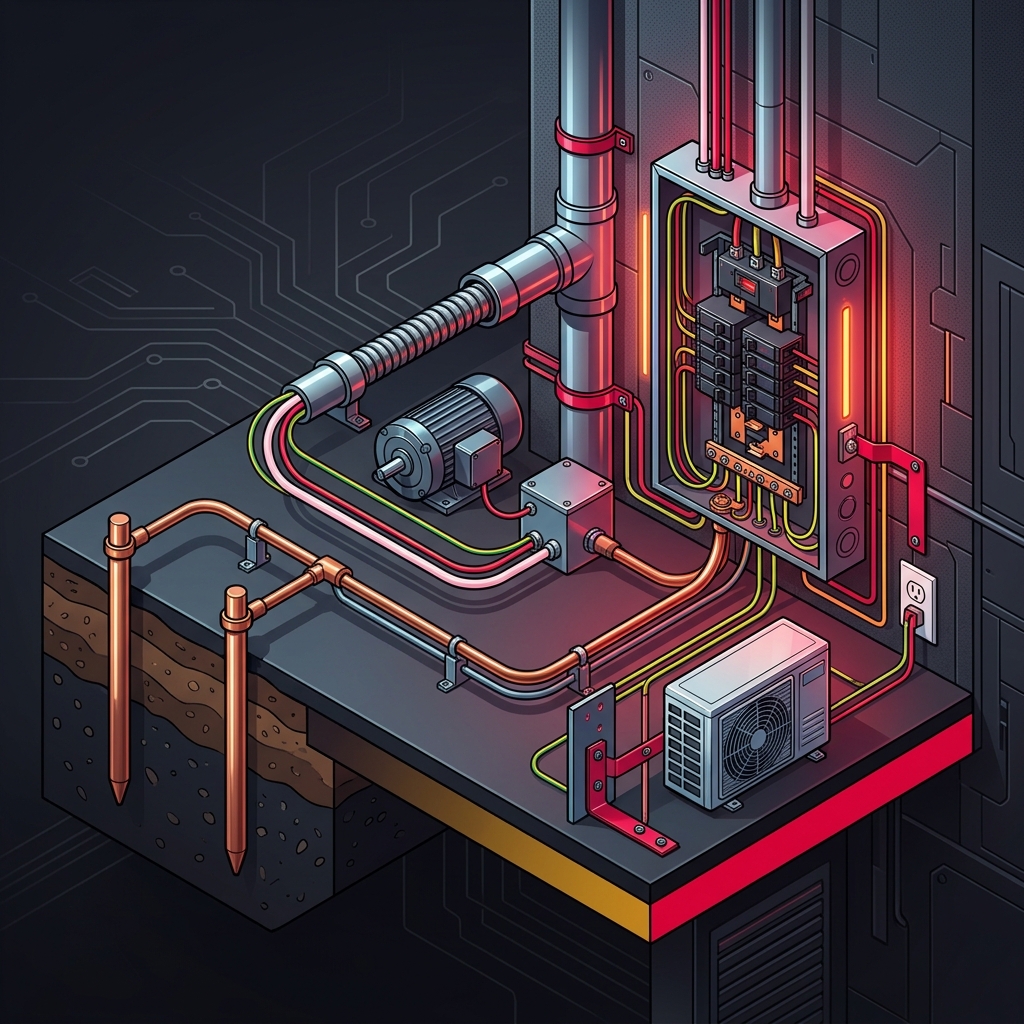
Picking Up Where We Left Off
In the first part of this series, we covered when you’re not required to establish a grounding electrode system at a detached building — namely, when you’re only running a single branch circuit or a single multi-wire branch circuit out to the structure. Now we turn the question around: when are you actually required to drive ground rods?
As the Electrical Code Coach puts it, the phrase “drive a ground rod” is used loosely here. What we’re really talking about is when you’re required to establish a grounding electrode system. Ground rods just happen to be the easiest way to accomplish that at most outbuildings, because there usually isn’t a footing electrode available to tie into.
Everything in this discussion assumes one thing: you’re feeding the detached building, shed, or garage from another structure.
One Ground Rule That Applies Universally
Before we get into electrodes, there’s a foundational rule worth burning into memory — one that catches a lot of electricians off guard:
“You are not allowed to feed any structure or building with more than one branch circuit, multi-wire branch circuit, or one feeder. You’re not allowed to run multiple cables to the structure and you’re not allowed to run multiple pipes to the structure.”
You get one supply to the structure. One feeder, or one branch circuit, or one multi-wire branch circuit — and that’s it. Why does the NEC care so much about this?
The reason is purely about safety and predictability. Imagine someone walks to the main structure, flips off a breaker, and assumes they’ve killed power to the detached garage. If you’ve run a second circuit out there for, say, exterior lighting, that person is now working on live conductors they didn’t know existed. Limiting the building to a single point of supply means power can be disconnected from one known location.
When a Grounding Electrode System Becomes Required
Here’s the simple test. You must establish a grounding electrode system at the detached building any time you supply it with more than a single branch circuit or a single multi-wire branch circuit.
The easiest way to recognise this in the field:
- You’re setting a panel at the structure. The moment you install a panelboard and start landing additional branch circuits off it, you’ve left the realm of “a single circuit.” That’s your bright-line indicator.
- You’re doing more than lights and receptacles on one circuit. If the load grows past what a single branch circuit or multi-wire branch circuit can serve, the requirement kicks in.
As the coach explains it:
“Anytime you’re doing more than a single branch circuit or a single multi-wire branch circuit you’re required to establish a grounding electrode system… but let me tell you when it’s easiest to think about doing it: it’s when you put a panel at that structure.”
So if your plan involves running conduit from the house, piping up into a panel at the garage, and feeding circuits from that panel — you already know a grounding electrode system is coming.
This requirement lives in NEC Article 250, Part III, with the detached-building rules governed by 250.32, which addresses buildings or structures supplied by a feeder or branch circuit.
How to Establish the Grounding Electrode System
Once you know it’s required, you establish the system using any of the traditional methods laid out in Article 250. The grounding electrodes themselves are described in 250.52, and the installation requirements follow in 250.53.
Your options include:
- Two driven ground rods — the most common solution at an outbuilding. Per 250.53(A)(2), a single rod must be supplemented by an additional electrode unless that single rod is shown to have 25 ohms or less to earth. Driving two rods sidesteps the resistance-testing requirement entirely.
- A concrete-encased electrode (ufer / footing ground) — excellent if the footing was already available and accessible when the structure was built.
- Plate electrodes — a less common but code-recognised option.
- Ground rings — a conductor encircling the structure, sized and buried per code.
For the typical detached garage or shed, that usually means: drive two ground rods, run your supply into the panel, and bond the grounding electrode conductor in. Done correctly, the whole installation is code-compliant.
The Bigger Picture
Let’s tie the two halves of this series together:
- Single branch circuit or single multi-wire branch circuit? No grounding electrode system required.
- More than that — especially a panel with downstream circuits? A grounding electrode system is required, and you’ll most likely satisfy it with two ground rods.
But establishing the grounding electrode system is only half the story. The next — and arguably most important — question is how many conductors you run to that structure. Do you pull three wires or four? And depending on the answer, do you keep the grounds and neutrals separated at the detached building, or bond them together?
That’s a critical distinction under 250.32(B), and getting it wrong is one of the most common grounding mistakes electricians make at detached structures. It’s the natural next step once you’ve sorted out whether a grounding electrode system is needed.
How NEC Mastery Fits Into This
Grounding at detached buildings is exactly the kind of topic that trips people up on the licensing exam — it’s conditional, it spans several sections of Article 250, and the rules change depending on how many circuits and conductors you run. The best way to lock it in is repetition with real exam-style questions.
- 8,000+ exam-style questions let you practise grounding and bonding scenarios over and over until “single branch circuit vs. panel feeder” becomes second nature — including the detached-building edge cases this video covers.
- Detailed explanations referencing specific NEC articles point you straight to 250.32, 250.52, and 250.53 every time you review an answer, building the mental map of Article 250 you’ll rely on come exam day.
- Timed mock exams weighted to your exam type replicate real test pressure, so when a grounding-electrode question appears, you recognise the pattern instantly and answer with confidence.
You don’t need to memorise every word of Article 250 — you need to understand when the rules apply and where to find them. NEC Mastery pairs directly with your codebook to help you get there through practice, not rote memorisation.
Start Practising Today
Download the NEC Mastery app and study with 8,000+ practice questions, weighted mock exams, and detailed explanations.