How to Size Grounding Electrode Conductors Using NEC Table 250.66
A step-by-step guide to sizing grounding electrode conductors with NEC Table 250.66, including the parallel-conductor trick and the electrode exception.
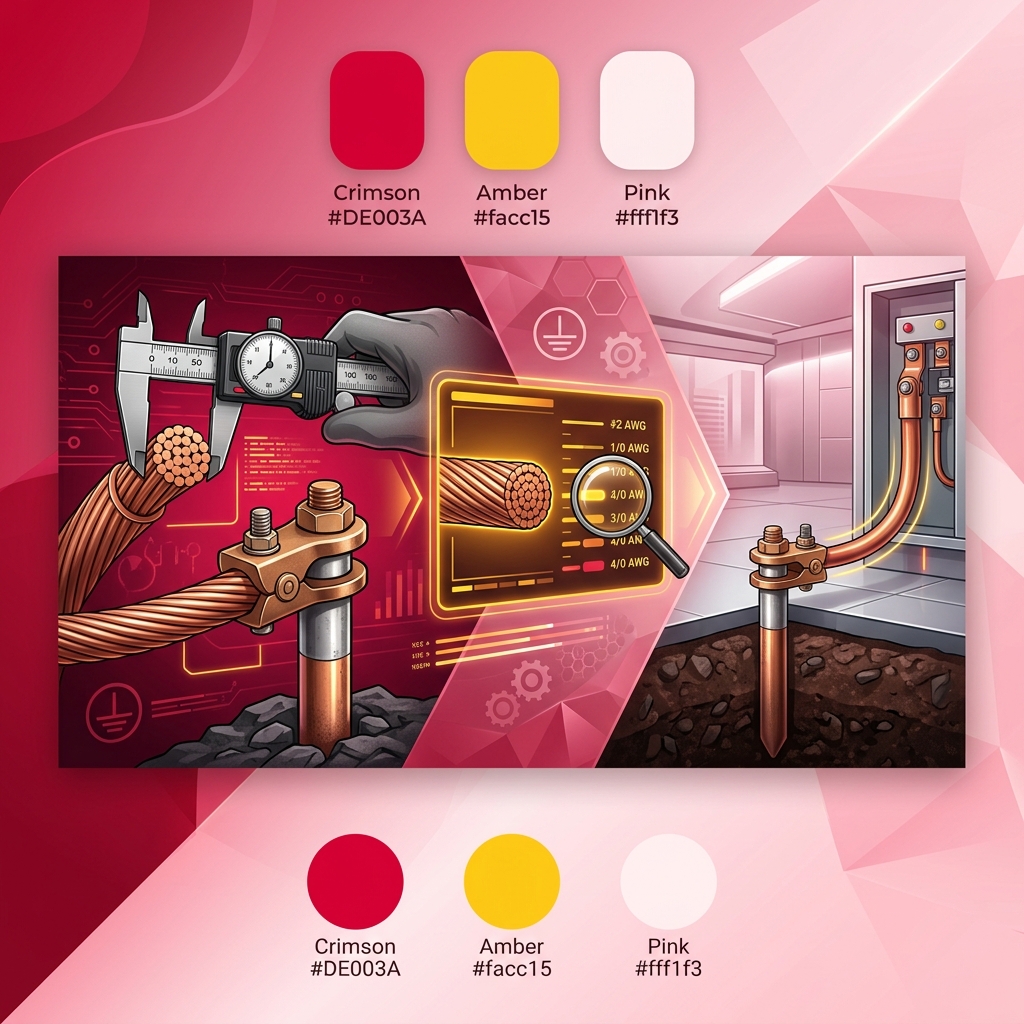
Why Grounding Electrode Conductor Questions Trip People Up
Sizing the grounding electrode conductor (GEC) is one of those topics that looks intimidating on the exam but becomes almost automatic once you understand the system behind it. According to the Electrical Code Coach, the secret isn’t memorising values — it’s learning to read the table correctly and know which of two methods applies.
As he puts it right at the start:
“I cannot stress to you enough — the next three tables that we’re getting ready to learn almost look identical, and if you don’t read the black bold heading when you get to the table you can be off in a heartbeat.”
So rule number one: when you land on a page, read the black bold heading first. For grounding electrode conductors you want Table 250.66 (page 116 in the 2017 NEC, page 123 in the 2020). The heading should read “Grounding Electrode Conductor for Alternating-Current Systems.”
How to Read Table 250.66
Once you’re sure you’re in the right table, the layout is simple if you slow down:
- The two columns on the left are the size of the largest ungrounded (hot) service conductors — one column for copper, one for aluminium.
- The two columns on the right are the grounding electrode conductor itself — again, one column for copper, one for aluminium.
Here’s the part where people make mistakes:
“If our mains are made of copper we select from the copper side. If our mains are aluminium we select from the aluminium side. Then there’s a second conductor involved — it’s the actual GEC itself — and we have to cross over and make sure we select from the right column.”
In other words, the material of your service conductors and the material of your grounding electrode conductor are chosen independently. It’s very common to run copper hots with a copper GEC, but you can’t assume it. Read the question, pick the correct row on the left for your service conductor, then cross to the correct column on the right for your GEC material.
The Two Ways to Size a GEC
This is the concept that, once it clicks, makes the whole topic easy. There are two classifications for sizing a grounding electrode conductor:
- No electrode type mentioned → use Table 250.66 at face value.
- A specific electrode type is mentioned → check Article 250.66(A), (B), or (C) first.
If the question never tells you what kind of electrode you’re connecting to (no “ground rod,” no “footing ground,” nothing), you go straight to the table. But if it names an electrode, you have to recognise that one of the lettered subsections may cap the size below what the table would give you.
Strategic Highlighting for the Lettered Subsections
If your state allows highlighting in the codebook, the Electrical Code Coach recommends marking three key spots in Article 250.66 so you can find them instantly under time pressure:
- 250.66(A) — Rod, Pipe, or Plate Electrodes: highlight the heading words “rod, pipe, or plate,” then highlight 6 AWG copper at the bottom of the paragraph. The GEC is never required to be larger than 6 AWG copper for these.
- 250.66(B) — Concrete-Encased Electrode: highlight “concrete-encased electrode,” then highlight 4 AWG copper.
- 250.66(C) — Ground Ring: highlight “ground ring.” For the minimum size you have to flip back to 250.52(A)(4), where you’ll find a ground ring isn’t required to be larger than 2 AWG.
These few highlights turn a slow code search into a five-second lookup.
Working Through the Table at Face Value
When no electrode is named, the process is mechanical. A few worked examples from the lesson:
- 100 A service, #4 copper mains, copper GEC → start on the copper service side, cross to the copper GEC column → 8 AWG.
- 225 A service, 3/0 copper mains, copper GEC → 4 AWG.
- 400 A service, 400 kcmil copper mains, copper GEC → 1/0.
Notice the pattern: read the question, pick the service-conductor row, cross to the correct GEC material column, and read off the answer. No memorisation required.
The Parallel-Conductor Trick
Parallel conductors are the one case where you can’t go straight to the table — and it’s a favourite exam trap. The method:
- Go to Chapter 9, Table 8 and find the circular-mil area of one conductor (the same table you use for voltage drop).
- Multiply by the number of conductors in parallel per phase.
- Take that total area back to Table 250.66 and find where it falls.
In the lesson’s example — a 400 A service with parallel 2/0 copper mains — each 2/0 conductor is 133,100 circular mils. With two in parallel:
“We just multiply it by two and that’s going to give us our total circular mils.”
That’s 266,200 cmil. Back in Table 250.66, the rows are listed in kcmil, so that total falls in the “over 3/0 through 350 kcmil” range (350 kcmil = 350,000 cmil). Crossing to the copper GEC column gives 2 AWG. You treat the parallel set as one large conductor.
When the Electrode Type Changes the Answer
This is where the lesson really earns its keep, because it’s the single biggest source of wrong answers. Consider two nearly identical questions:
- 200 A service, 2/0 copper mains, with a ground rod → because a rod is named, you go to 250.66(A): not required to be larger than 6 AWG copper.
- 200 A service, 2/0 copper mains, with a concrete-encased electrode → a specific electrode is named, so you go to 250.66(B): not required to be larger than 4 AWG copper.
The crucial point:
“This value over here in Article 250.66 actually supersedes the table. That’s why we have to be very careful, and this is where a lot of people get the answers wrong on their actual examination.”
If you’d ignored the electrode and sized from the table, you’d have picked a larger conductor and gotten the question wrong. The lettered subsections override the table whenever they apply.
Mixing Conductor Materials
Two more examples show why you must keep the two material choices separate:
- 100 A service, #2 aluminium mains, copper GEC → start on the aluminium service side, then cross to the copper GEC column.
- 400 A service, 500 kcmil aluminium mains, copper GEC → aluminium service row, copper GEC column → not required to be larger than 2 AWG.
The takeaway: always reread the question for both the service-conductor material and the GEC material before you make a selection.
The Bottom Line
Sizing a grounding electrode conductor comes down to a short decision tree:
- Read the black bold heading so you know you’re in Table 250.66 and not one of its look-alikes.
- Ask whether an electrode type is mentioned. No → size from the table. Yes → check 250.66(A), (B), or (C) first, because those values supersede the table.
- Match both materials — the service conductor on the left, the GEC on the right — independently.
- For parallel conductors, convert to total circular mils via Chapter 9, Table 8 before returning to the table.
Get those four habits down and grounding-and-bonding questions become some of the easiest points on the exam.
How NEC Mastery Fits Into This
The Electrical Code Coach’s approach works because of repetition — running the same decision tree across dozens of slightly different scenarios until reading Table 250.66 becomes second nature. That’s exactly what NEC Mastery is built for.
- 8,000+ exam-style questions give you endless grounding-and-bonding practice, including the tricky parallel-conductor and electrode-exception variations that catch people out.
- Detailed explanations referencing specific NEC articles — like 250.66(A), (B), (C) and Chapter 9, Table 8 — reinforce why an answer supersedes the table, so the logic sticks instead of the number.
- Timed mock exams weighted to your exam type let you practise spotting “is an electrode mentioned?” under real time pressure, so the two-method choice becomes automatic.
Pair the app with your codebook and your highlighting, and the next time a grounding electrode conductor question shows up, you’ll flow right through it.
Start Practising Today
Download the NEC Mastery app and study with 8,000+ practice questions, weighted mock exams, and detailed explanations.