Dishwasher and Disposal on the Same Circuit? The Truth About the 50% Rule
Can a dishwasher and garbage disposal share one branch circuit? Here's what NEC 210.23 actually says and why the 50% rule is so misunderstood.
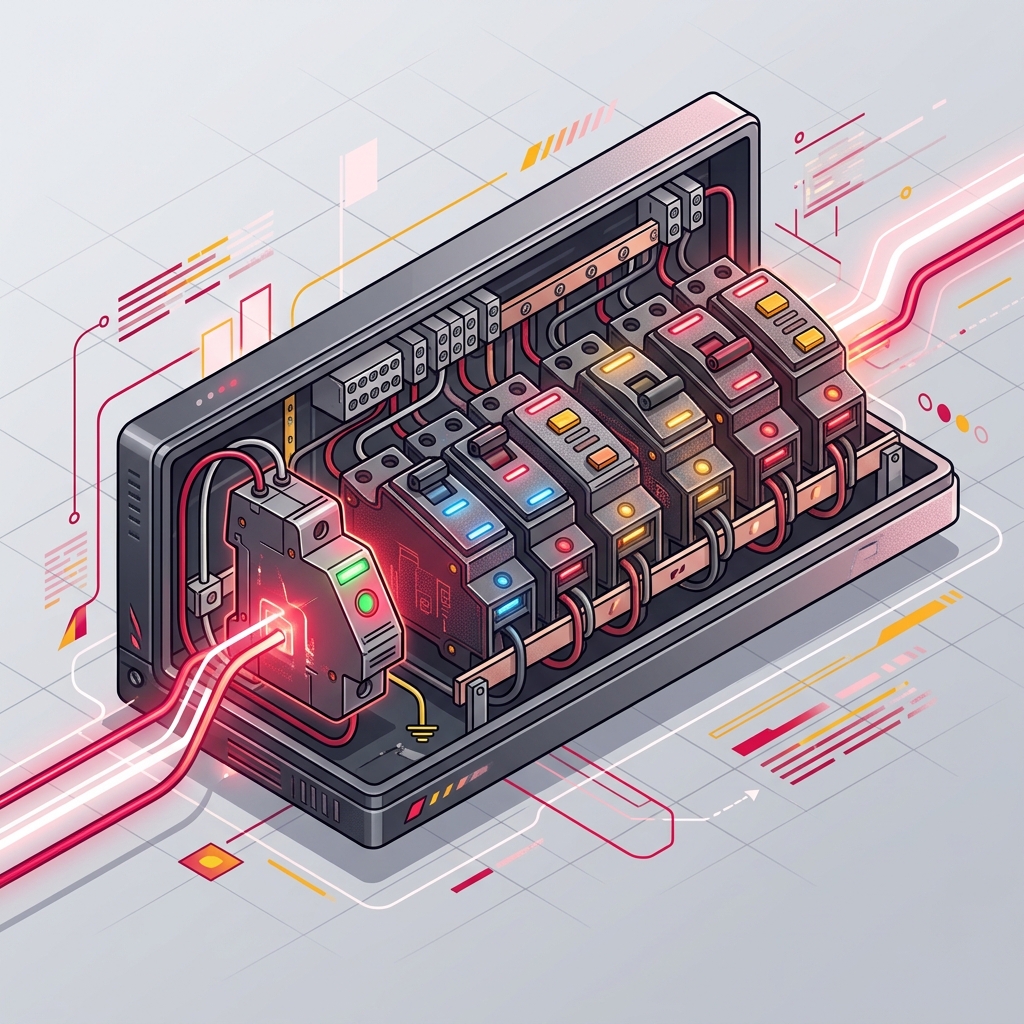
The Question Every Residential Electrician Has Heard
Can the garbage disposal and the dishwasher be on the same circuit? Should they be? And what’s the deal with that 50% rule that inspectors keep bringing up?
The Electrical Code Coach tackled this head-on, and the answer cuts through years of jobsite folklore. The short version: yes, you can almost always put both on the same circuit — and the 50% rule that’s failed countless inspections is one of the most misunderstood passages in the entire NEC.
Let’s break it down the way he did, scenario by scenario.
First Things First: Manufacturer Instructions Win
Before we touch the math, there’s one rule that supersedes everything else:
“If the manufacturer’s instructions call for a dedicated circuit, that supersedes the code and you should run a dedicated circuit to either one of these appliances.”
This is the same principle that applies to refrigerators, microwaves, and any other fixed appliance. Always check the nameplate and installation manual first. If the manufacturer says dedicated, it’s dedicated — full stop. Dedicated circuits for these appliances are also becoming more common as manufacturers tighten their requirements.
For the rest of this discussion, we’ll assume neither appliance requires a dedicated circuit, and we’re working with a 20-amp branch circuit (though the same logic applies to a 15-amp circuit).
Scenario One: Non-Continuous Loads
Imagine an 11-amp dishwasher that is not a continuous load (meaning it isn’t expected to run at maximum current for three hours or more), paired with a 5-amp disposal.
The math is simple:
- 11 A (dishwasher) + 5 A (disposal) = 16 A
That fits comfortably on a 20-amp circuit. You’re allowed to put both on the same branch circuit, and this is spelled out in NEC 210.23(B)(2).
If you’ve ever failed an inspection over this exact setup, you’re not alone — but the inspector was applying the code incorrectly.
Scenario Two: When the Dishwasher Is a Continuous Load
Many modern dishwashers can run programmable cycles for five or six hours. By the NEC’s definition, that makes them a continuous load — and continuous loads must be calculated at 125% of their nameplate rating.
Same 11-amp dishwasher, but now it’s continuous:
- 11 A × 1.25 = 13.75 A
- 13.75 A + 5 A (disposal) = 18.75 A
Still under 20 amps. Still legal on the same circuit.
The 50% Rule — And Why Almost Everyone Reads It Wrong
Here’s where things get interesting. Plenty of electricians (and inspectors) have been taught that no fixed piece of equipment can occupy more than 50% of a branch circuit. Under that interpretation, a 10-amp dishwasher could share a 20-amp circuit with a disposal — but a 10.1-amp dishwasher would suddenly need its own dedicated circuit.
That’s not what 210.23(B)(2) actually says. Let’s read it carefully:
“The total rating of utilization equipment fastened in place, other than luminaires, shall not exceed 50 percent of the branch-circuit ampere rating where lighting units, cord-and-plug connected utilization equipment not fastened in place, or both, are also supplied.”
That last clause is everything. The 50% limit only kicks in when the circuit is also feeding lighting or cord-and-plug connected portable equipment. It is not a blanket rule against fixed appliances exceeding half the circuit.
What This Means in Practice
Here’s how to organise the rule in your head:
- Two fixed appliances on the same circuit? Add them up (with the 1.25 multiplier on any continuous loads). As long as the total stays at or under the branch-circuit rating, you’re code-compliant. Fill the circuit up to its maximum if you want.
- Fixed appliance plus lighting or general-use receptacles? Now the 50% cap applies to the fixed appliance. If your dishwasher draws 10 amps or less on a 20-amp circuit, you can also feed kitchen lights from it. But a 10.1-amp dishwasher pushes you over 50%, and you’d have to pull those lights or receptacles off and feed them another way.
- The dishwasher itself never has to be dedicated unless the manufacturer says so. The 50% rule limits what else you can add to the circuit — it doesn’t force isolation.
That’s the piece that trips people up. The code isn’t saying “this appliance is too big to share.” It’s saying “this appliance is too big to share with lighting or portable loads.”
A Quick Recap of the Rules
To put it all together for two fixed appliances on a 15- or 20-amp branch circuit:
- Check manufacturer instructions first. Dedicated means dedicated.
- Identify continuous loads. Anything expected to run at full current for 3+ hours gets multiplied by 1.25.
- Add the loads together. If the total is at or below the breaker rating, you’re good.
- Want to add lights or receptacles too? Then no single fixed appliance can exceed 50% of the circuit. Fifty percent on the nose is fine — 51% is not.
- If a fixed appliance crosses 50%, pull the lights and general-use receptacles off and feed them from another circuit. You can still keep adding fixed equipment up to the full rating.
Why This Matters on the Job
This isn’t just academic. Wiring a kitchen efficiently means knowing exactly what you can combine on a circuit and what you can’t. The Electrical Code Coach put it plainly:
“It has nothing to do with the 50 rule when you’re dealing with two fixed appliances. That rule only applies if those other outlets are supplying lighting or other receptacles that are supplying cord and plug connected equipment.”
This language hasn’t changed in several code cycles, and it’s not changing any time soon. Once you read 210.23(B)(2) the way it’s actually written, the misunderstanding evaporates.
And if you’d rather just run a dedicated dishwasher circuit anyway? That’s perfectly fine. The code is the floor, not the ceiling.
How NEC Mastery Fits Into This
Branch-circuit calculations are one of the most heavily tested topics on every electrical exam — and questions about NEC 210.23, continuous loads, and the 50% rule show up constantly. Here’s how NEC Mastery helps you build real fluency with these calculations:
- 8,000+ exam-style questions include dozens of branch-circuit load problems involving dishwashers, disposals, and other fixed appliances — exactly the type of scenarios you’ll see on the journeyman or master exam
- Detailed explanations referencing specific NEC articles like 210.23(B)(2) help you internalise why an answer is correct, not just memorise it — so the next time an inspector pushes back on a 50% rule call, you’ll know how to read the code with them
- Timed mock exams weighted to your exam type train you to apply the 1.25 continuous-load multiplier, add fixed loads correctly, and spot the difference between a fixed-appliance question and a mixed-load question under real time pressure
- Residential-focused practice means you’ll see kitchen circuit, laundry circuit, and small-appliance branch circuit questions in the same context they appear on real exams — and the same way they show up on the jobsite
Get the code right once, and you’ll never fail another inspection over a dishwasher and disposal sharing a circuit again.
Start Practising Today
Download the NEC Mastery app and study with 8,000+ practice questions, weighted mock exams, and detailed explanations.