AFCI Rules When Extending or Modifying Branch Circuits
Learn when extending or modifying an existing branch circuit triggers AFCI protection under NEC 210.12, and when the 6-foot exception applies.
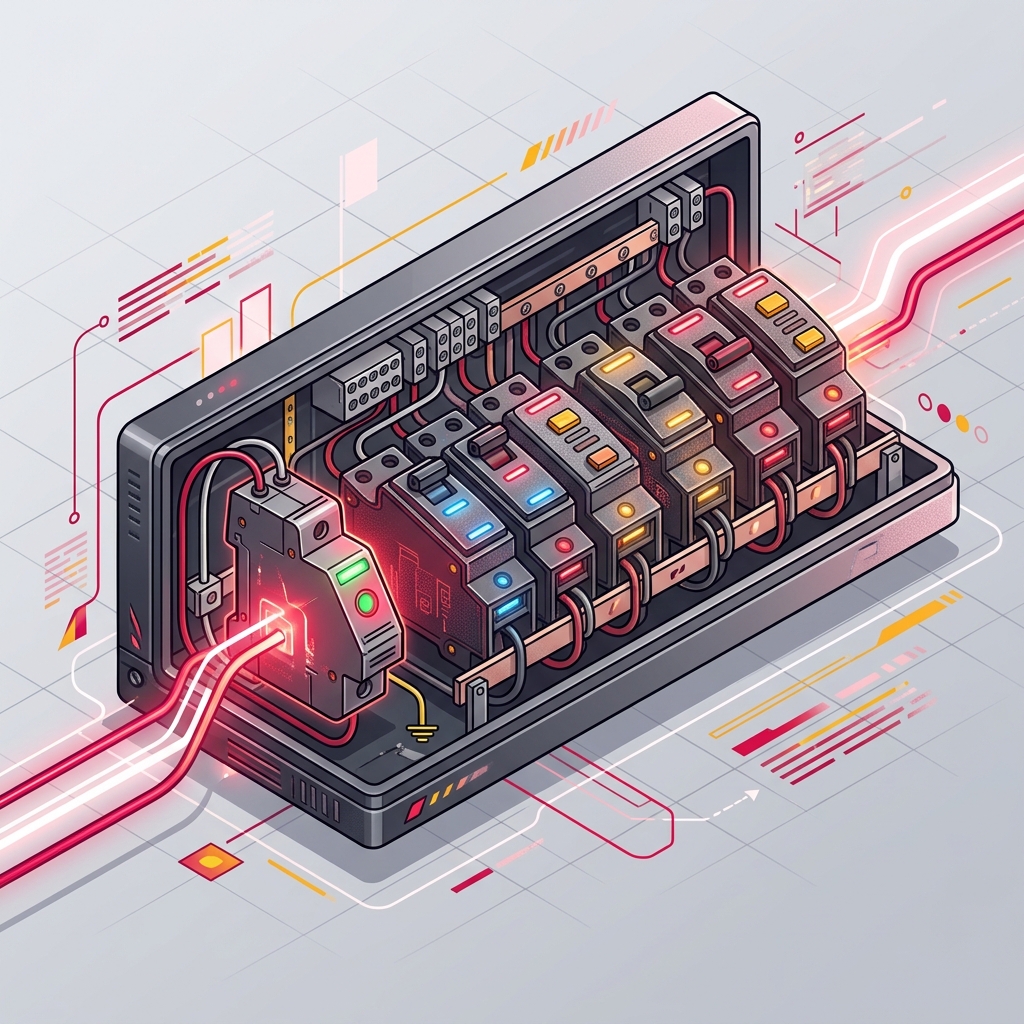
When a Simple Service Call Triggers a Code Upgrade
You get called out to an older home — maybe built in the 1950s or 60s — and the homeowner wants something simple. Add a receptacle in a closet for a new gadget. Move a switch a few feet. Relocate the panel during a service change. Easy money, right?
Not so fast. The moment you start extending or modifying an existing branch circuit, you may have just invoked AFCI protection on the entire circuit — whether the original installation ever required it or not. This is one of the most overlooked rules in residential work, and it’s a great way to underbid a job if you don’t know it exists.
Let’s walk through what NEC 210.12(E) in the 2023 edition actually says, when the exception saves you, and when you’re stuck adding AFCI protection to a house that never had it.
Replacement vs. Modification: Two Different Rules
First, an important distinction. There are two separate scenarios in the code, and they live in different articles:
- Replacing a device in a location that now requires AFCI protection — this falls under Article 406 (specifically the receptacle replacement rules in 406.4(D)). If you’re swapping a receptacle in a bedroom that today would require AFCI, you have to provide AFCI protection on the replacement.
- Modifying or extending a branch circuit — this falls under 210.12(E). This is the rule we’re focused on here.
Both rules can apply on the same job, but they’re triggered by different actions. Replacing a device is one trigger. Extending the wiring itself is another.
What Counts as a Branch Circuit?
Quick refresher, because the definition matters here. A branch circuit is the conductors between the final overcurrent protective device and the outlet(s) it serves. So from the breaker in your panel out to the receptacle, the light, or whatever load is on the end — that’s your branch circuit.
The moment you change anything about that circuit — extend it, modify it, add to it — you’re in 210.12(E) territory.
The 6-Foot Exception (And What It Really Means)
Here’s the relief valve in the rule. If you’re extending a branch circuit:
- 6 feet or less, AND
- Not adding any additional outlets
…then AFCI protection is not required. As Paul Abernathy explains in the video:
“If you’re extending it not more than 6 feet and you’re not adding any additional outlets to the system — and when we say outlets, we’re not just talking about receptacles — then you don’t have to invoke the AFCI protection.”
A few practical points about how to measure that 6 feet:
- The 6 feet is the conductor between enclosures, not the total wire length. Wiring coiled inside the panel or jammed into a device box doesn’t count.
- You could pull 8 feet of actual cable through a wall, but if the run between two boxes is under 6 feet, you’re inside the exception.
- This is how a service change works: if you flip the panel around or shift it 3 feet down the wall, you’re extending every branch circuit a bit. As long as none of those extensions exceed 6 feet between enclosures and you’re not adding outlets, you don’t have to retrofit AFCI on every circuit.
Why “Outlet” Doesn’t Just Mean Receptacle
This trips up a lot of electricians. The NEC definition of outlet is broader than just a receptacle. It’s any point on the wiring system where current is taken to supply utilisation equipment. That includes:
- Lighting outlets
- Switched outlets feeding luminaires
- Hard-wired equipment connections
So if you extend a circuit 4 feet to add a new switch leg for a closet light — yes, you’re under the 6-foot length, but you’ve added an outlet. The exception is gone. AFCI protection is required for that whole branch circuit.
The Closet Receptacle Example
Paul gives a great real-world example: a homeowner wants to add a single receptacle inside a closet. (And yes — you’re allowed to install a receptacle in a closet, despite what some folks think.)
Here’s the trap. Even though the run might be short:
- You’re modifying the branch circuit
- You’re adding an outlet
That means the exception doesn’t apply at all. The length is irrelevant. You must now bring AFCI protection to that entire branch circuit. Not just the new piece — the whole circuit.
Two Ways to Comply
Once AFCI protection is required, you’ve got options. The rule applies to the entire 120-volt branch circuit, but there’s more than one place to install the protection:
- AFCI breaker in the panel — protects everything downstream. Easiest if the panel will accept one.
- Combination AFCI receptacle at the first outlet — protects the circuit in series upstream and parallel downstream. This is the move when the existing panel won’t accept an AFCI breaker (older or proprietary panels).
- Dual-function (AFCI/GFCI) device — handy when you’re doing a job that requires both types of protection. AFCI and GFCI technologies coexist without conflict; you can mix an AFCI breaker with a GFCI receptacle on the same circuit if needed.
Pricing the Job Honestly
This is where understanding 210.12(E) becomes a business issue, not just a code issue. When you bid an “add a receptacle” job in an older home, your scope might quietly include:
- An AFCI breaker (or a combination AFCI receptacle)
- Possibly a panel that can’t accept the AFCI breaker you need
- GFCI protection if the location now requires it under 210.8
- Replacement-rule obligations under Article 406 for any devices you swap
If you don’t price these in, you eat them. Worse, if you skip them and someone gets hurt later, you’re the one explaining to an investigator why you didn’t follow the minimum safety standard.
“Electricians are notoriously known to not like AFCIs. It is what it is — it’s in the code, you’ve got to follow the code. It’s a minimum safety standard.”
Circuit-Level vs. Outlet-Level Rules — A Useful Mental Model
One more tip worth absorbing. When you read NEC requirements, it helps to ask: does this rule apply to the entire branch circuit, or just to a specific outlet location?
- 210.12 talks about the 120-volt branch circuit — so AFCI protection applies to the whole circuit. That’s why you have flexibility in where the device lives.
- 210.8 GFCI rules are largely tied to outlet locations — kitchens, bathrooms, garages, outdoors — and the protection has to cover that specific point.
Recognising which type of rule you’re dealing with tells you instantly whether your protective device can sit at the panel, at the first receptacle, or has to be right at the device.
The Bottom Line
Before you quote that “simple” job in an older house, run through this checklist:
- Am I extending or modifying an existing branch circuit?
- Is the run between enclosures more than 6 feet?
- Am I adding any outlets — receptacles, lights, switches feeding luminaires, hard-wired equipment?
- If any of those are “yes,” AFCI protection is on the table for the whole circuit.
- Then check Article 406 separately for any devices you’re replacing.
Residential work is not as simple as outsiders think. The nuances in 210.12(E) and 406.4(D) are exactly the kind of rules that separate electricians who understand the code from electricians who just memorise a few common scenarios.
How NEC Mastery Fits Into This
Rules like 210.12(E) are easy to read once and forget — until they show up on an exam question worded just slightly differently than you expected. That’s where consistent practice changes everything.
- 8,000+ exam-style questions cover AFCI, GFCI, replacement, and modification scenarios across residential branch circuits, so the 6-foot exception and “what counts as an outlet” stop being trick questions
- Detailed explanations referencing specific NEC articles — including 210.12, 210.8, and 406.4 — help you build a mental map of where these rules live and how they interact
- Timed mock exams weighted to your exam type let you practise spotting the difference between a replacement rule and a modification rule under time pressure, the same way you’d have to on the job
- No expensive course required — pair NEC Mastery with your codebook and you’ll start recognising these residential nuances instinctively, not just when someone points them out
Start Practising Today
Download the NEC Mastery app and study with 8,000+ practice questions, weighted mock exams, and detailed explanations.