When and Why to Separate Grounds and Neutrals
A clear breakdown of when grounds and neutrals must be bonded versus separated, why it matters for safety, and what happens when you get it wrong.
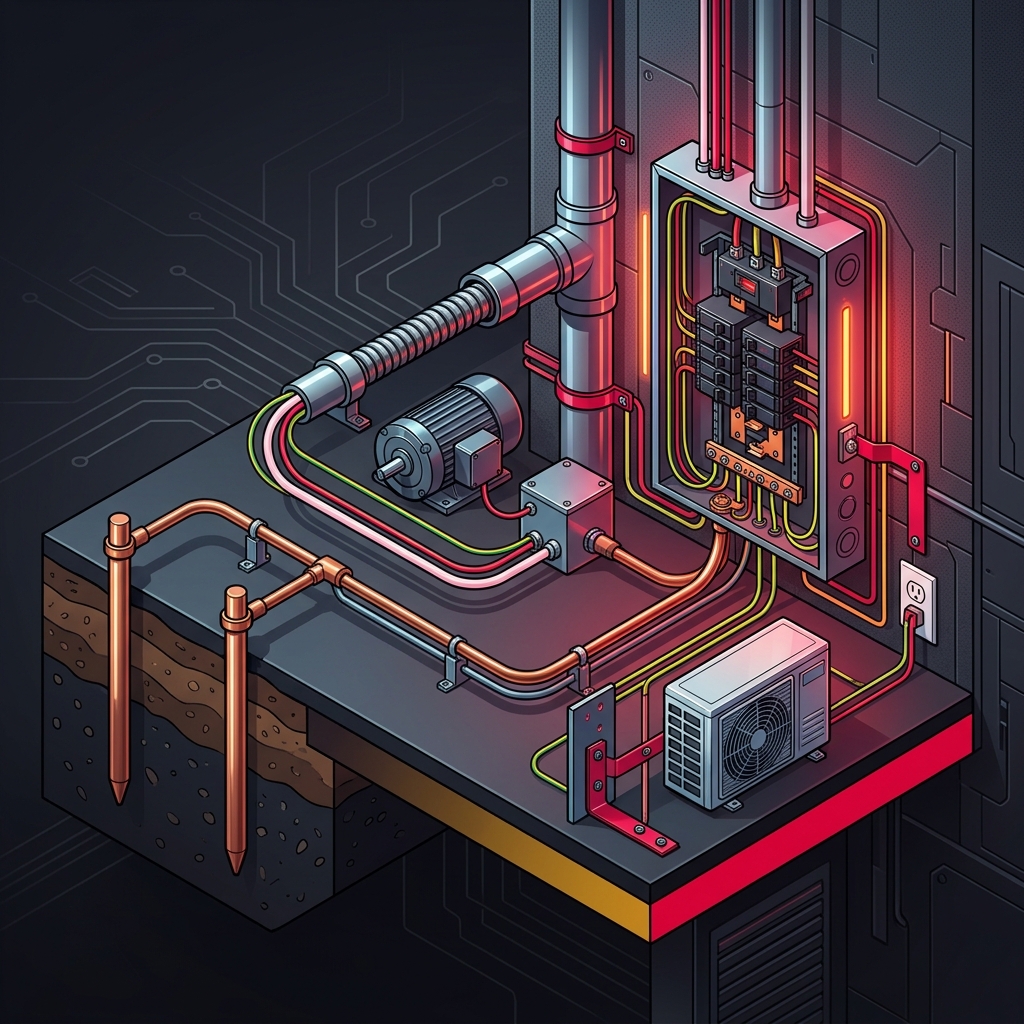
The Most Misunderstood Rule in Electrical Work
Ask a room full of apprentices when to bond grounds and neutrals and when to separate them, and you’ll get a surprising range of answers. It’s one of the most misunderstood — and underappreciated — parts of the NEC. Yet getting it wrong doesn’t just mean a failed inspection. It means current flowing on metal components that people touch every day.
Electrical Code Coach breaks this topic down in a way that’s both simple to remember and deeply important to understand. Let’s walk through the when and the why.
The Rule: When to Bond, When to Separate
The core principle is straightforward:
- Connect grounds and neutrals at the first point of disconnect — this is where the main bonding jumper lives
- Separate grounds and neutrals at every other point in a standard electrical system
That’s it. Every sub panel, every downstream disconnect, every other enclosure past that first point of disconnect — grounds and neutrals must be kept on separate buses with no connection between them.
What Counts as the First Point of Disconnect?
This is where real-world scenarios matter, because the first point of disconnect isn’t always in the same place.
-
Meter with a back-to-back main panel: The main panel is your first point of disconnect. Bond grounds and neutrals here using the main bonding jumper — typically a green ground screw or a bonding strap that connects the neutral bar, the ground bar, and the metal enclosure together.
-
Meter disconnect combo: The combo unit itself is your first point of disconnect. Bond grounds and neutrals in the combo. Any panel you install inside the building after that is now a sub panel — separate grounds and neutrals there.
-
Separate disconnect under the meter: If you’ve installed a standalone disconnect beneath the meter, that’s your first point of disconnect. Everything downstream gets separated.
The key takeaway: identify where that first disconnect lives, bond there, and separate everywhere else.
Why Separation Matters: The Path of Current
Here’s where things get genuinely dangerous, and where understanding the physics behind the rule transforms you from someone who follows code blindly to someone who understands why the code exists.
We’ve all heard the phrase “current takes the path of least resistance.” There’s some truth to it, but the full picture is more nuanced:
“Electrical current can take any and all paths back to the source that it is connected to. The lion’s share may go on the path of least resistance, but the wire may not be the path of least resistance.”
This is the critical insight. Current doesn’t just pick one path and stick to it. It divides across every available path back to the source, proportional to the conductance of each path.
The Perfect System: Separated Correctly
In a properly wired system where grounds and neutrals are separated at the sub panel, here’s what happens:
- Current leaves the breaker on the hot conductor
- It does its work at the load (light, receptacle, appliance)
- It returns on the insulated neutral conductor all the way back to the source
- At no point does current leak onto any other path
This is exactly how the system is designed to work. The neutral carries the return current. The equipment grounding conductor sits there quietly, doing nothing — unless there’s a fault, at which point it provides a low-impedance path to trip the breaker.
The Dangerous System: Bonded Where It Shouldn’t Be
Now imagine you’ve bonded grounds and neutrals in the sub panel. Current leaves the breaker, hits the load, and returns on the neutral — but when it reaches the sub panel, it finds that the neutral is connected to the ground bus, which is connected to the metal enclosure, which is connected to the metal conduit.
Suddenly, return current is flowing on:
- The neutral conductor (as intended)
- The equipment grounding conductor
- The metal can of the sub panel
- The metal conduit between panels
- The metal enclosure of the main panel
- Every other metal component connected to those paths
“Instead of the current leaving the breaker, hitting the neutral, riding back on an insulated conductor all the way on its path back to the source — it left the breaker, hit here, could have flowed on this metal box, flowed all the way back, would have hit the can, all of the metal components.”
And this isn’t theoretical. This is measurable current flowing on components that people interact with daily.
Scale This Up and the Danger Becomes Clear
In a typical house, you might have multiple sub panels feeding dozens of circuits. Each circuit has an equipment grounding conductor that connects to receptacles, light fixtures, appliances, and metal enclosures throughout the building. All of these grounds are interconnected — and that’s by design, so faults clear quickly.
But if grounds and neutrals are improperly bonded at a sub panel, normal return current now has access to that entire interconnected grounding network. That means current could potentially flow on:
- The shell of your refrigerator
- The metal body of your chandelier
- Bare ground wires throughout the walls
- Metal bathtubs and showers
- Metal water piping
- Metal stud framing
- Every single metal component connected to the grounding system
This is not fault current. This is normal operating current flowing on surfaces that people touch, stand in, and bathe near. The shock hazard is real and ongoing — not waiting for something to go wrong, but actively present every time a load draws current.
The Exception You Should Know About
There are very limited exceptions in the NEC related to older installations where dryers and ranges were wired with a three-wire connection (two hots and a neutral, no separate ground). These grandfathered installations allowed the neutral to serve double duty as both the return path and the equipment ground. This practice is not permitted in new work, and if you encounter one of these older installations, do not attempt to modify it without consulting a qualified electrician — disconnecting an existing bond without understanding the full picture could create a larger hazard.
The Bottom Line
The rule itself is simple enough to fit on an index card:
- Bond grounds and neutrals at the first point of disconnect — install the main bonding jumper
- Separate grounds and neutrals everywhere else — no exceptions in new work
- Understand why — unseparated grounds and neutrals allow normal return current to flow on every metal surface in the system, creating a persistent shock hazard
Knowing the “when” gets you through the inspection. Knowing the “why” makes you a better electrician — one who can troubleshoot problems, explain decisions to customers, and recognise dangerous conditions in existing work before someone gets hurt.
How NEC Mastery Fits Into This
Grounding and bonding is one of the most heavily tested topics on the journeyman and master electrician exams — and one of the most commonly missed. Understanding when to bond and when to separate is fundamental, but exam questions will test you on the specific articles, exceptions, and scenarios that trip people up.
- 8,000+ exam-style questions cover grounding and bonding from every angle — service entrances, sub panels, separately derived systems, and the exceptions that examiners love to test
- Detailed explanations referencing specific NEC articles help you build a mental map of where grounding requirements live in the codebook, so you can find answers quickly under time pressure
- Timed mock exams weighted to your exam type let you practise identifying grounding scenarios at exam speed, building the confidence to handle tricky bonding questions without second-guessing yourself
- No expensive course required — pair NEC Mastery with your codebook and the understanding you’ve built from resources like Electrical Code Coach, and you’ll have everything you need to master grounding and bonding for both the exam and the field
Start Practising Today
Download the NEC Mastery app and study with 8,000+ practice questions, weighted mock exams, and detailed explanations.