Surge Protection Code Changes: What Changed From NEC 2017 to 2023
A breakdown of NEC surge protection rules in 230.67 across the 2017, 2020, and 2023 cycles, from voluntary to mandatory for dwelling units and beyond.
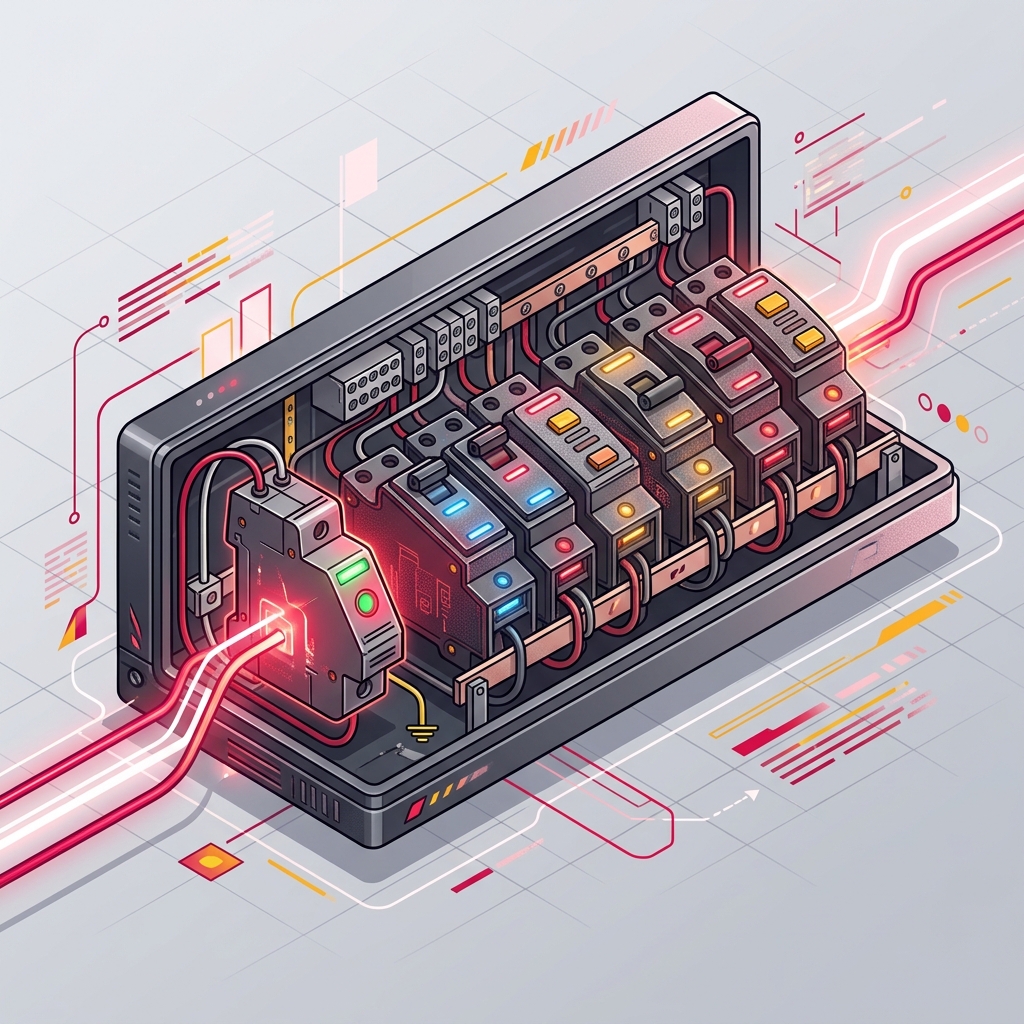
Why Surge Protection Is No Longer Optional
If you have been working under the 2017 NEC, you may not have given surge protection much thought. There was no mandatory requirement, and it was simply considered good practice. That changed dramatically with the 2020 code cycle, and the 2023 NEC expanded the requirements even further.
Section 230.67 is now one of the most talked-about additions in recent NEC history, and for good reason — it affects nearly every residential service installation and a growing number of commercial-adjacent occupancies. Here is a full breakdown of how surge protection requirements have evolved across three code cycles.
2017 NEC: No Mandatory Surge Protection
The 2017 NEC contained no requirement for mandatory surge protection on services. If you were (or still are) working under this code cycle, surge protective devices were entirely at the discretion of the installer or homeowner.
As Electrical Code Coach puts it:
“If you are on the 2017 code, this is where we’re at. We’re still celebrating.”
That celebration ended with the next code cycle.
2020 NEC: Section 230.67 Arrives
The 2020 NEC introduced a brand-new section — 230.67 — dedicated entirely to surge protection requirements. This section is broken into four parts, each addressing a different aspect of the requirement.
Part A: Where It Applies
Section 230.67A requires surge protection on all services that supply dwelling units. Every single one. This is a blanket requirement for residential installations, though it notably excludes commercial applications — which, given the complexity and cost implications, makes sense for a first-cycle introduction.
Part B: Location Requirements (and the Exception)
Part B specifies that the surge protective device must be either:
- An integral part of the service equipment — installed inside the panel or enclosure, whether factory-built or field-added
- Immediately adjacent to the service equipment — mounted directly next to the panel or meter-disconnect combo
The phrase “immediately adjacent to” does leave some room for interpretation by the authority having jurisdiction (AHJ). A surge protector mounted right beside the panel clearly qualifies. A device installed in a small junction box coming off the side of an outdoor meter-only enclosure would also typically count.
But here is where it gets interesting. The exception to 230.67B says you do not have to install surge protection at the service equipment at all — provided you install it at every distribution panel downstream. That includes the main sub-panel feeding the house and every additional sub-panel in the system.
“Literally, they said in Part 67B that you must do it here and then they’re like, nah, we’re just kidding. You really don’t have to if you followed this, this, and that.”
It is a classic NEC pattern: a firm rule followed by an exception that offers an alternative compliance path. If you prefer to keep your surge protection indoors at your distribution panels rather than at the exterior service, you absolutely can — you just have to cover every downstream panel.
Part C: Type of Device
Section 230.67C specifies that the surge protective device must be Type 1 or Type 2:
- Type 1 — installed on the line side of the service, between the secondary service drop (or lateral) and the load-side connection. This might be installed by the utility or in another approved manner.
- Type 2 — installed anywhere on the load side of the main breaker or service disconnect. This includes inside the main panel, at any sub-panel, or at any other load-side location.
Type 3 devices — such as surge-protective receptacles and plug-in power strips — do not satisfy this requirement. This is a distinction worth remembering for exam questions.
Part D: Replacements
This is the part that generated the most debate. Section 230.67D requires surge protection not only on new construction but also when service equipment is being replaced. That includes:
- Replacing the meter
- Replacing or adding a meter-disconnect combo
- Replacing the panel when it serves as the first point of disconnect
“If you touch or change any of this service equipment, including your meter, meter-disconnect combo, or if your panel is the first point of disconnect, you’re now going to be required to install whole-home surge protection.”
Some electricians argue this pushes the NEC into design-manual territory — telling tradespeople what to install during retrofit work rather than simply setting safety minimums. But the reasoning behind it is sound: modern homes are packed with sensitive electronics. Arc-fault breakers, ground-fault breakers, smart thermostats, dishwasher control boards, HVAC circuit boards — a single surge event can destroy thousands of dollars in equipment. And in a worst-case scenario, a lightning strike that takes out smoke detectors while simultaneously causing a fire is a genuine life-safety concern.
2023 NEC: Expanding the Scope
The 2023 NEC keeps Section 230.67 at the same code reference but broadens its reach in two key ways.
Expanded Occupancy Types (Part A)
The 2020 code required surge protection only for dwelling units. The 2023 NEC adds:
- Dwelling units (unchanged from 2020)
- Boarding house accommodations (dormitory units)
- Hotel and motel guest room accommodations
- Patient sleeping quarters in nursing homes and assisted living facilities
This expansion follows a familiar NEC pattern — similar to how arc-fault circuit interrupter (AFCI) requirements were gradually extended to more room types over successive code cycles. The addition of nursing home and assisted living facilities is particularly significant; a surge that knocks out medical equipment like oxygen machines presents a direct threat to life.
Importantly, all of these occupancies must comply with 230.67 in full — meaning Type 3 surge protectors (receptacles and strips) still do not qualify. This is something the industry hopes will be further clarified in the 2026 cycle.
Minimum Rating Requirements (New Part E)
The 2023 NEC introduces a brand-new Section 230.67E, establishing minimum performance standards for surge protective devices. Specifically, devices must have a nominal discharge rating of no less than 10 kA (kiloamperes).
This addition suggests that some manufacturers or installers were using inadequate devices to technically comply with the letter of the code while effectively skirting its intent. The 10 kA minimum ensures that installed devices can actually handle a meaningful surge event.
What This Means for Working Electricians
If you are working in a jurisdiction that has adopted the 2020 or 2023 NEC, surge protection is no longer an upsell or an optional add-on — it is code. Here is a quick summary of what you need to know:
- All dwelling unit services require surge protection (2020+)
- Hotels, dormitories, and nursing facilities are added in the 2023 cycle
- Devices must be Type 1 or Type 2 — no plug-in strips or receptacle types
- Installation must be at the service equipment or immediately adjacent, unless you cover every downstream panel
- Service replacements trigger the requirement, not just new construction
- Minimum device rating is 10 kA (2023+)
How NEC Mastery Fits Into This
Surge protection requirements under 230.67 are exactly the kind of topic that shows up on journeyman and master electrician exams — multi-part code sections with exceptions, device-type distinctions, and evolving requirements across code cycles. Understanding the nuances between Type 1, Type 2, and Type 3 devices, knowing when the replacement rule kicks in, and recognising which occupancies are covered in which code year are all fair game.
- 8,000+ exam-style questions cover code changes like 230.67 across multiple NEC cycles, so you can test your understanding of how requirements have evolved — not just what the current rule says
- Detailed explanations referencing specific NEC articles help you build a mental map of where surge protection fits within Article 230 and how it connects to broader service equipment requirements
- Timed mock exams weighted to your exam type let you practise navigating multi-part code sections under pressure, building the speed you need to handle questions with exceptions and cross-references
- Whether you are on the 2020 or 2023 cycle, NEC Mastery helps you stay current on the code your jurisdiction has actually adopted — no expensive course required, just focused practice with your codebook
Start Practising Today
Download the NEC Mastery app and study with 8,000+ practice questions, weighted mock exams, and detailed explanations.