How to Tab the 2026 Electrical Code Book – Ultimate Guide Page by Page
A complete page-by-page guide to tabbing your 2026 NEC codebook so you can find any article, table, or section in seconds during your electrical exam.
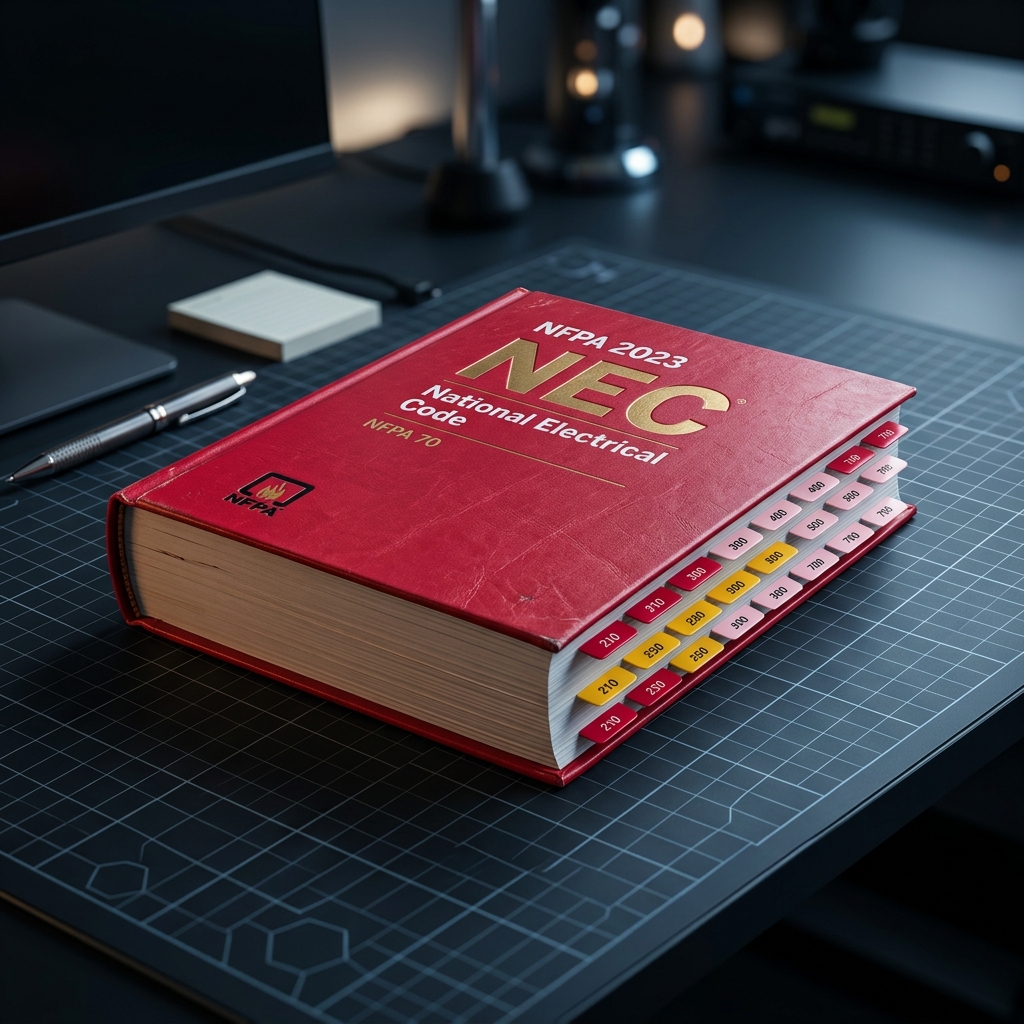
Why Tabbing Your NEC Codebook Is Non-Negotiable
If you’re sitting for any electrical licensing exam — journeyman, master, or contractor — your NEC codebook is your single most important tool. But a codebook without tabs is like a toolbox without labels: everything’s in there, but good luck finding it under pressure.
Tabbing your 2026 NEC transforms it from a 1,000-page reference manual into a navigational instrument. When you can flip directly to Article 250 or Table 310.16 in seconds, you stop wasting precious exam minutes hunting through pages and start spending them answering questions correctly.
This guide walks you through the complete page-by-page tabbing process for the 2026 NEC, based on a proven system used by the Electrical Code Coach.
Before You Start: The Right Technique
Before placing a single tab, there are a few rules that will save you headaches later:
- Always start from the back of the book and work your way forward
- Comb the book flat every time you place a tab — smooth all the pages so edges line up evenly
- Start your first tab about three-quarters of an inch from the bottom of the page to prevent tearing
- Don’t overlap tabs — place each one just above the previous one
- Work upward until you reach the top, then start back at the bottom and repeat
“You want to every time you put a tab, you comb the book flat. Make sure that all your edges line up. And you’re going to start about 3/4 of an inch off of the bottom of the book. If not, it tends to rip.”
You can place tabs on the left or right side of the page depending on your preference. Some electricians prefer pulling from the right, others from the left. There’s no wrong answer — just be consistent.
The Complete Page-by-Page Tab Guide
Index Tabs
Start at the very back of the book with your index tabs. These let you jump to the alphabetical index quickly when you need to look up a keyword:
- T–Z → Page 991
- R–S → Page 983
- N–Q → Page 977
- L–M → Page 971
- H–K → Page 965
- F–G → Page 959
- D–E → Page 953
- C → Page 945
- A–B → Page 941
Annexes and Chapter 9 Tables
These are some of the most frequently referenced pages on any electrical exam:
- Annex D → Page 905
- Annex C → Page 845
- Chapter 9, Table 8 → Page 791
- Chapter 9, Table 5 → Page 785
- Chapter 9, Table 4 → Page 781
Chapter 9 tables cover conduit fill, conductor properties, and raceway dimensions — topics that appear on virtually every electrical exam. Having these tabbed is essential.
Special Equipment and Systems (Articles 500–760)
This section covers everything from fire alarms to solar installations to hazardous locations:
- Fire Alarms → Page 767
- Article 760 → Page 761
- Article 725 → Page 759
- Article 722 → Page 731
- Article 720 → Page 723
- Article 706 → Page 715
- Article 705 → Page 709
- Article 702 → Page 707
- Article 700 → Page 695
- Article 695 → Page 689
- Article 690 → Page 673
- Section 680.26 → Page 663
- Article 680 → Page 655
- Article 625 → Page 627
- Article 600 → Page 601
- Article 590 → Page 595
- Article 555 → Page 593
- Article 550 → Page 567
- Article 517 → Page 529
- Article 501 → Page 443
- Article 500 → Page 441
Motors and Equipment (Articles 400–450)
Motor calculations are a staple of electrical exams, so these tabs are critical:
- Article 450 → Page 421
- Article 445 → Page 419
- Article 440 → Page 413
- Table 430.248 → Page 411
- Table 430.52 → Page 397
- Section 430.22 → Page 391
- Article 430 → Page 385
- Article 424 → Page 369
- Article 422 → Page 363
- Article 410 → Page 355
- Article 408 → Page 349
- Article 406 → Page 339
- Article 404 → Page 337
- Article 400 → Page 321
Raceways and Cables (Articles 300–392)
This is one of the densest sections of the NEC and one you’ll visit constantly during the exam:
- Article 392 → Page 309
- Article 376 → Page 301
- Article 358 → Page 289
- Article 356 → Page 287
- Article 352 → Page 281
- Article 350 → Page 279
- Article 348 → Page 277
- Article 344 → Page 275
- Article 340 → Page 273
- Article 338 → Page 271
- Article 334 → Page 267
- Article 330 → Page 263
- Article 320 → Page 259
- Section 314.28 → Page 241
- Table 314.16 → Page 237
- Article 312 → Page 231
- Table 310.16 → Page 227
- Article 310 → Page 217
- Article 300 → Page 199
Foundation Articles (Articles 90–250)
These are the articles you’ll reference most. Grounding and bonding (Article 250), overcurrent protection (Article 240), branch circuits (Article 210) — this is where exams live:
- Table 250.122 → Page 157
- Table 250.102 → Page 153
- Table 250.66 → Page 149
- Article 250 → Page 137
- Article 242 → Page 133
- Section 240.21 → Page 125
- Section 240.6(A) and Table 240.6(A) → Page 123
- Article 240 → Page 121
- Article 230 → Page 111
- Article 225 → Page 109
- Article 215 → Page 107
- Section 210.52 → Page 103
- Section 210.12 → Page 97
- Section 210.8 → Page 95
- Article 210 → Page 93
- Article 200 → Page 91
- Article 130 → Page 89
- Article 120 → Page 79
- Table 110.26 → Page 71
- Article 100 → Page 27
- Article 90 → Page 25
- Table of Contents → Page 3
The Hidden Benefit of Tabbing It Yourself
Here’s something most people don’t consider: the process of tabbing your codebook is itself a study session. As you flip through every major article and section to place tabs, you’re building a mental map of the entire NEC. You’re seeing how the book flows from general requirements in Articles 90–100, through wiring methods in Chapter 3, equipment in Chapter 4, and special occupancies in Chapter 5.
By the time you’ve finished tabbing, you’ll already have a stronger sense of the codebook’s organisation than most people who skip straight to practice questions. That spatial familiarity pays dividends on exam day when you’re under time pressure.
Tips for Getting the Most Out of Your Tabs
- Don’t be afraid to adjust placement — if a tab lands awkwardly depending on how your pages fall, placing it on the page before or after is perfectly fine
- Add your own custom tabs for sections you personally struggle with or reference often
- Combine tabbing with highlighting — as you tab each section, highlight key tables and exceptions you know get tested frequently
- Replace damaged tabs immediately — a torn or missing tab defeats the entire purpose
How NEC Mastery Fits Into This Strategy
Tabbing your codebook is the first step — it gives you the navigation system. But navigation without practice is like having a GPS with no destination. You need to actually use those tabs under timed exam conditions to build the speed and muscle memory that carries you through test day.
That’s where NEC Mastery comes in:
- 8,000+ exam-style questions that send you flipping through every tabbed section of your codebook, reinforcing your mental map with every answer you look up
- Detailed explanations referencing specific NEC articles and tables — when you check an answer, you’ll see exactly which article it came from, helping you connect your tabs to the content behind them
- Timed mock exams weighted to your exam type let you practise navigating your freshly tabbed codebook under real time pressure, so exam day feels like just another practice run
- Coverage across all major NEC chapters — from Article 90 definitions to Chapter 9 conduit fill tables, every tab you placed will get put to work
Tab the book. Learn the layout. Then practise until finding the right page is second nature. That’s the formula — and NEC Mastery gives you the unlimited practice reps to make it happen.
Start Practising Today
Download the NEC Mastery app and study with 8,000+ practice questions, weighted mock exams, and detailed explanations.