AFCI Breaker Nuisance Tripping: Causes & Troubleshooting
Why AFCI breakers nuisance trip, the most common wiring and appliance causes, and a step-by-step troubleshooting method for electricians.
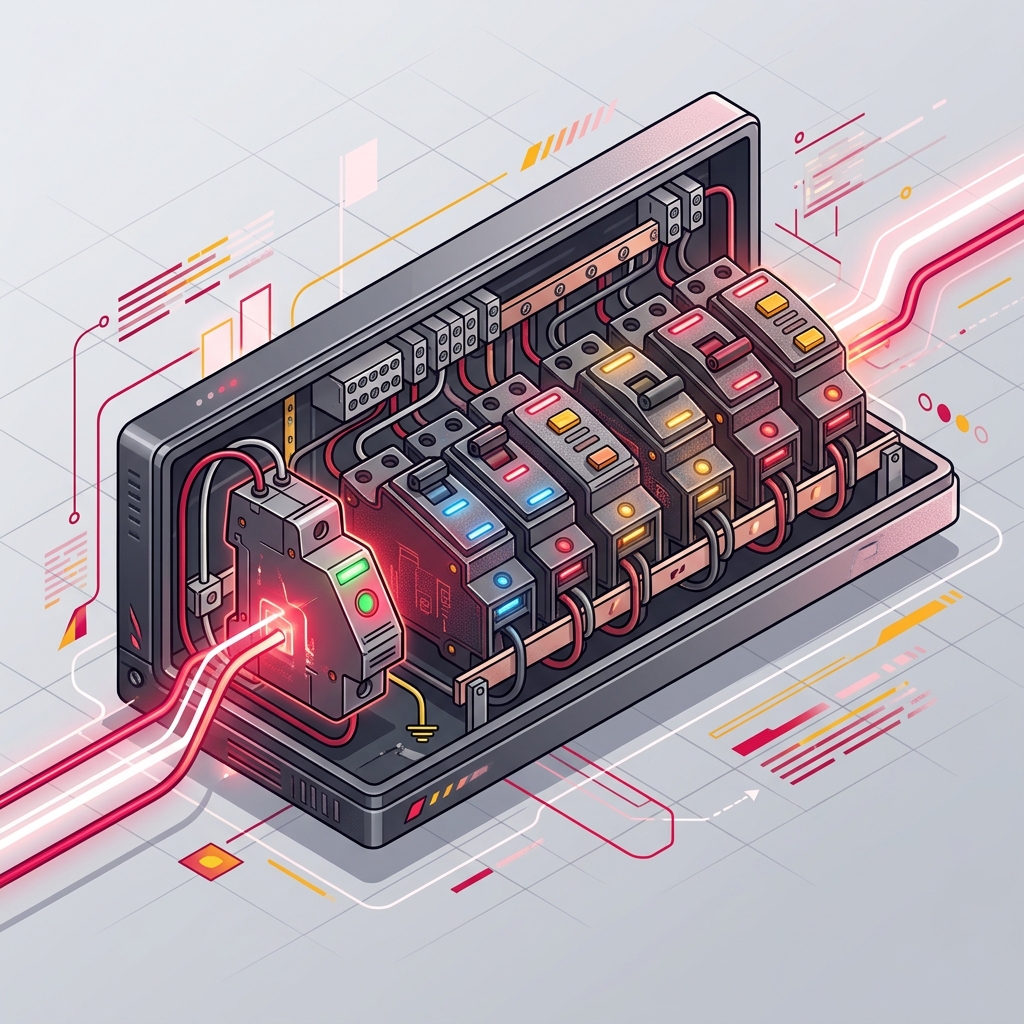
Why AFCI Breakers Nuisance Trip
If you’ve wired residential work in the last decade, you’ve dealt with it: an AFCI breaker that trips and you can’t figure out why. The customer calls, frustrated. The breaker tripped overnight, or it trips randomly throughout the day, and nobody can tie it to a specific event.
AFCI (Arc-Fault Circuit Interrupter) protection was first introduced into the NEC in 1999 and has expanded significantly through the 2002, 2005, 2008, and subsequent code cycles. Today, under NEC 210.12, virtually the entire residential dwelling is required to have AFCI protection, with only a few exceptions.
An AFCI breaker works by monitoring the electrical sine wave on the circuit. A normal sine wave is smooth and predictable. When arcing occurs — from damaged wiring, loose connections, or faulty equipment — that sine wave becomes jagged and erratic. The breaker detects this pattern and shuts the circuit off before a fire can start.
But sometimes the breaker trips when there’s no actual arc. That’s nuisance tripping — and here’s how experienced electricians systematically track it down.
Common Causes of AFCI Tripping
Before you start chasing ghosts, work through these known causes. In the vast majority of cases, the problem falls into one of these categories.
1. Reverse Polarity
Some AFCI breakers will operate with reverse polarity, but many will trip — either instantly or once a load is applied. This can happen in two places:
- At the breaker: The hot and neutral are landed on the wrong terminals
- At a receptacle: The hot and neutral are reversed on the device itself
Either way, the current paths are crossed, and the breaker’s monitoring circuitry sees an abnormality. Always verify correct polarity at both the panel and every device on the circuit.
2. Wrong Neutral in the Panel
This is one of the most common mistakes, and it happens to electricians at every experience level. When you’re stripping back multiple circuits in the panel, it’s easy to grab a neutral from an adjacent circuit and land it on the wrong breaker.
“It’s happened to me before — you know, a master level electrician. It can happen to anybody from apprentice to pro. You just get to rocking and rolling and you accidentally grab the wrong neutral.”
The breaker may energise fine, but the moment a load hits either circuit, the neutral current isn’t returning on the correct path. The AFCI can’t properly monitor the sine wave, and it trips instantly.
3. Shared Neutrals Downstream
This is a variation of the wrong-neutral problem, but it happens out in the field rather than in the panel. If two circuits share a junction box — common in switch boxes with multiple hots — and their neutrals get connected together, you’ll trip the AFCI every time.
The neutral must remain continuous and dedicated to its own circuit throughout the entire run. Any current bleeding onto another circuit’s neutral will cause the AFCI to trip.
4. Neutrals and Grounds Touching
This is particularly relevant for GFCI and dual function breakers, but it can affect AFCI-only breakers as well due to their built-in current leakage detection.
Here’s how it typically happens: you install a receptacle, and when you push it back into the box, the bare ground wire bends up and contacts the neutral terminal. With older standard breakers, this wouldn’t cause a trip. With arc-fault or ground-fault protection, it absolutely will.
A GFCI monitors current balance — if one amp goes out on the hot, one amp must return on the neutral. If even 4 to 6 milliamps leak onto the ground path instead, the breaker sees an imbalance and shuts off. Since dual function breakers include GFCI protection, this neutral-ground contact becomes a common culprit.
5. Old Appliances and Motors
Old lamps, radios, refrigerators, vacuum cleaners, and worn-out surge protector strips are frequent offenders. Some produce sine wave distortions that mimic arc signatures — particularly devices with old motors or compressors. The breaker interprets the startup pattern as an arc and trips.
“The first thing I do when I troubleshoot AFCIs is have the customer unplug everything — unplug everything on that circuit. Often it’s an old lamp or an old radio or an old refrigerator.”
The Step-by-Step Troubleshooting Method
When you’ve got an AFCI that’s tripping and you can’t immediately identify the cause, here’s a systematic approach that works every time.
Step 1: Assume It’s Your Fault
If you’re going back on your own work, start with the assumption that something was miswired. Check the breaker for correct polarity. Verify you have the right neutral. This mindset saves time because, frankly, it usually is a wiring issue.
Step 2: Unplug Everything on the Circuit
Have the customer disconnect every single device on the affected circuit — lamps, chargers, strip bars, everything. Then wait. Give it a day, two days, even three. If the tripping stops, you’ve confirmed it’s a connected device, not the wiring.
Step 3: Reintroduce Devices One at a Time
Once the circuit is stable with nothing plugged in, have the customer add back one device per day. This isolates the offending appliance. You can do this over the phone — you don’t need to roll a truck every time.
“I explain to the customer: listen, I can’t come out there every time this is going to happen. We’re going to work on this over the phone and we’re going to work on it together.”
Common culprits at this stage include:
- Old phone chargers
- Worn-out surge protector strips
- Vacuum cleaners with brushed motors
- Older refrigerators and compressors
- Lamps with faulty switches
Step 4: Pull Every Device Out of the Box
If unplugging everything doesn’t solve it, start pulling receptacles and switches out of their boxes on that circuit. Don’t just inspect them — physically pull them out and use a flathead screwdriver to separate the wires in the back of the box.
This step catches two problems:
- Nicked conductors: Installers who cut too deep when stripping Romex can nick the insulation on individual conductors. Over time, that nick opens up and creates a dead short or arc fault
- Incidental contact: Grounds touching neutrals, hots touching grounds — connections that only exist because everything is crammed tight in the box
“I cannot tell you how many times I’ve pulled out a receptacle and it’s gotten rid of a dead short or an arc fault trip.”
Step 5: Replace the Breaker
Only after exhausting every other possibility should you replace the breaker itself. With modern AFCI and dual function breakers, the manufacturing quality has improved dramatically since the early days. A defective breaker is genuinely rare.
Step 6: Investigate the Wiring Itself
If a new breaker still trips, the problem is likely physical damage to the wire — a staple driven too hard, a nail or screw penetrating the cable, or a conductor broken inside its jacket. At this point, start disconnecting runs one at a time from the farthest point back toward the panel until the tripping stops. Replace the damaged section.
Prevention Is Easier Than Troubleshooting
The best way to deal with AFCI nuisance tripping is to avoid causing it in the first place:
- Strip Romex carefully — score one inch from the tip and peel back the jacket. Never run a razor blade deep along the cable
- Verify every neutral in the panel before energising
- Keep grounds and neutrals separated in every box
- Test every circuit thoroughly before leaving the job site
- Use quality breakers from reputable manufacturers
As the Electrical Code Coach puts it: callbacks should almost not exist in your business. Correct problems while you’re on site — you can’t afford to be running back for issues that proper diligence would have caught.
How NEC Mastery Fits Into This
Understanding AFCI protection isn’t just a field skill — it’s an exam topic that trips up test-takers just as often as it trips breakers. NEC 210.12 and its requirements for arc-fault circuit interrupter protection appear regularly on journeyman and master electrician exams, and the questions go beyond simply knowing where AFCI is required.
- 8,000+ exam-style questions cover AFCI requirements, GFCI protection, dual function breakers, and the specific NEC articles that govern their installation — so you build deep familiarity with how these protections interact
- Detailed explanations referencing specific NEC articles help you understand not just the “what” but the “why” behind arc-fault and ground-fault protection requirements, building the kind of knowledge that makes both exam questions and field troubleshooting easier
- Timed mock exams weighted to your exam type ensure you can navigate questions about 210.12, branch circuit protection, and equipment grounding conductors quickly and confidently under test conditions
- No expensive course required — pair NEC Mastery with your codebook to master the protective device requirements that show up on every exam and every job site
Start Practising Today
Download the NEC Mastery app and study with 8,000+ practice questions, weighted mock exams, and detailed explanations.